The Language Gap Is a Legal Risk. Here's How Firms Are Closing It.
Robert Diaz
Founder & CEO
June 12, 2026
6 min read
In 2019, a medical malpractice case in Florida turned on a single word.
The patient's family had described his condition as intoxicado — a Spanish term meaning something closer to "nauseated" or "feeling sick from something ingested." The interpreter on duty rendered it as "intoxicated." The physician treated for drug overdose. The patient, who was having a stroke, went undiagnosed for 36 hours.
The family received a $71 million settlement.
The legal exposure didn't originate in the operating room. It originated in a conversation. And in the gap between what was said and what was understood.
Law firms deal with a version of this problem every day.
The client population has changed. The infrastructure hasn't.
Over 68 million people in the United States speak a language other than English at home. In Los Angeles, Miami, Houston, and New York, that figure climbs above 40 percent of the population. In many practice areas such as immigration, family law, criminal defense, personal injury, estate planning — multilingual clients aren't the exception. They're the majority.
Most firms are managing this with a phone interpreter service number pinned to the front desk, a binder of referrals, and a bilingual paralegal who has quietly become the office's informal translation resource. None of that scales, and all of it creates exposure.
Where it actually breaks down
The intake call is where most of it goes wrong.
That first conversation is where trust gets built, where the scope of representation takes shape, where clients decide whether to keep talking. When it flows through a phone interpreter, something gets lost. Clients underreport. They answer the question asked, not the question behind it. They omit details they think are irrelevant; details that often turn out to be the heart of the matter. The back-and-forth that a good intake depends on gets consumed by the mechanics of three-way relay.
Attorneys end up representing a simplified version of their client's story.
Document review is a quieter problem, but it accumulates. A client's right to understand what they're signing isn't optional, but explaining a settlement agreement or a retainer letter through a non-specialist interpreter is slow and imprecise. The client nods. They sign. Whether they understood is unknowable. That's where malpractice exposure quietly builds.
Witness preparation is its own category of difficult. Preparing a non-English speaking witness for deposition requires a feedback loop that a phone interpreter breaks. The attorney can't tell if the witness hesitated because they didn't understand the question or because they're thinking carefully about the answer. At the deposition itself, a second interpreter takes over. Often neither the attorney nor the witness has ever met. Whatever preparation happened is now unreliable.
The costs most firms don't measure
Certified legal interpreters typically bill between $75 and $150 per hour with minimums and travel fees. For a firm handling any real volume of multilingual clients, that's a significant annual line item.
But the costs that don't show up on invoices are bigger. Interpreter availability dictates scheduling. Meetings get delayed. Depositions get rescheduled. Deadlines slip. Potential clients who can't communicate clearly during that first call often just don't come back, and firms never count that as lost revenue because it never made it into a file. And every third-party interpreter is another person in the room, another platform - another set of terms of service that most firms haven't thought carefully about.
There's also the straightforward problem that nobody in the room can verify what's actually being translated.
Where it shows up most
Immigration attorneys probably feel this most acutely. The facts of an asylum claim or removal defense are often deeply personal and require a level of trust that's genuinely hard to build with an interpreter on the line. Attorneys who can communicate directly with clients in their native language consistently describe better intakes and, they believe, better outcomes.
Family law has its own version of the problem. Divorce, custody, and domestic violence cases require clients to describe experiences that are difficult to articulate even in a first language. The emotional weight of these cases demands a real connection. An interpreter between a client and their attorney in a custody hearing prep session isn't just a logistical problem. It's a human one.
Personal injury practices in dense urban markets often serve a predominantly non-English-speaking client base, and in PI, speed matters. Statute of limitations reasons aside, clients who don't feel understood during intake will call the next firm on the list. The ability to communicate clearly, quickly, and without third-party friction is a genuine competitive advantage.
Estate planning deserves more attention here than it usually gets. Explaining the implications of a trust, a healthcare directive, or a durable power of attorney requires precision. These documents govern some of the most consequential decisions a person will make. The assumption that this explanation can be reliably delivered through a generalist phone interpreter should concern any estate planning attorney who thinks carefully about their duty of care.
What we're building
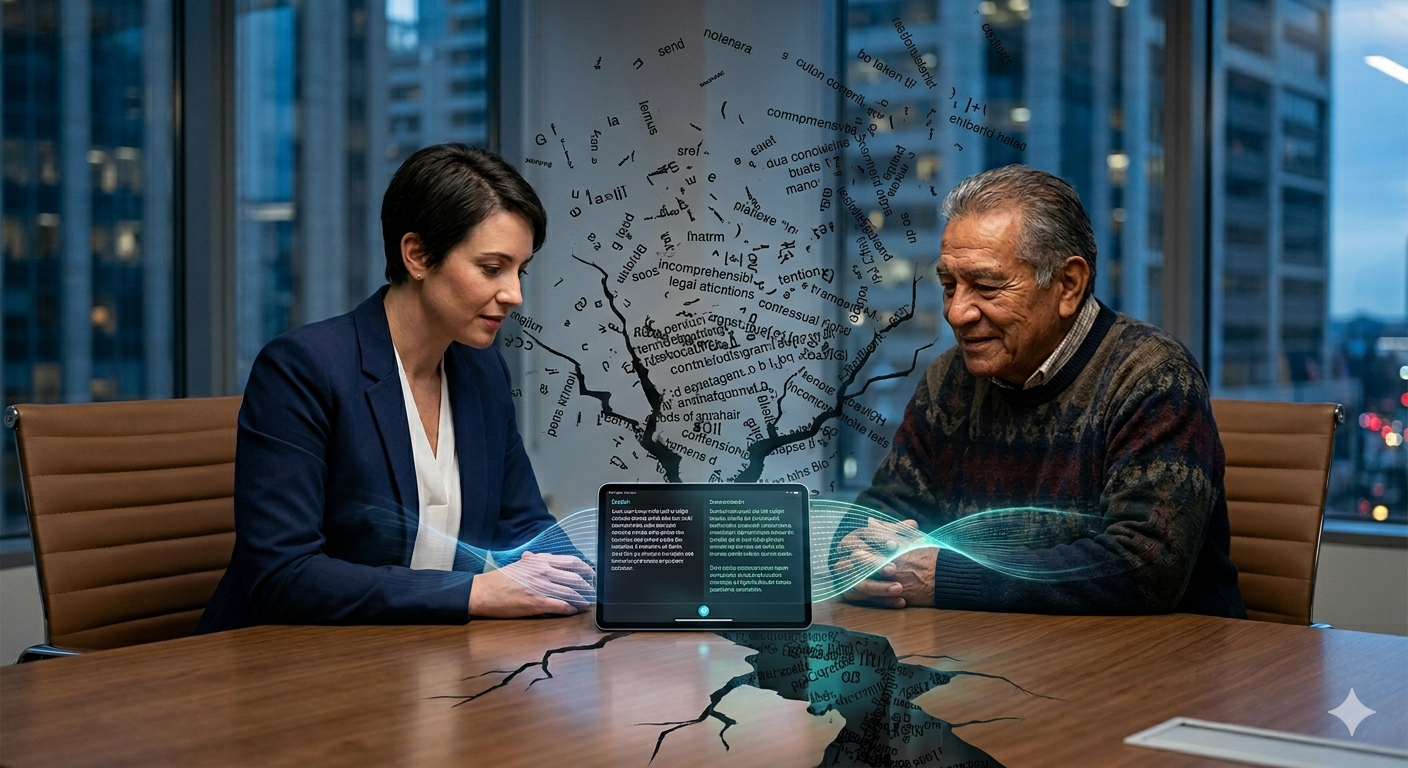
Vozway is a browser-based calling app with real-time AI translation built in. Both parties speak directly to each other. Each hears the conversation in their own language as it happens. No scheduling, no per-minute billing, no third party on the line.
We want to be honest about what it's for. Vozway is not a replacement for certified court interpreters in formal proceedings. In depositions, trials, and official hearings where a certified human interpreter is legally required, that standard should hold.
What Vozway changes is everything else. The intake call on a Tuesday afternoon when your interpreter isn't available. The follow-up call to explain what happened at the last hearing. The document walkthrough before signing. The witness prep session the night before. The check-in call where a client is just asking if there's any news.
Those are the conversations that build attorney-client relationships. And they're the ones that currently happen badly, or not at all, across language lines.
On confidentiality: calls are end-to-end encrypted and not stored by default. We know attorney-client privilege is a threshold question for any tool that touches client communications. It wasn't an afterthought.
We're onboarding early users now, and legal practices are a priority. If you want to talk through a specific use case, reach out. I read everything.
Join the Waitlist
Ready to break language barriers?
Be among the first to try Vozway when we launch.